
COOLINGBIS®

Powerful coagulation in surgical oncology.
20 years of experience with open and closed HIPEC / HITHOC procedures.
- Description
- information
- benefits
- studies
- legal information
Technology:
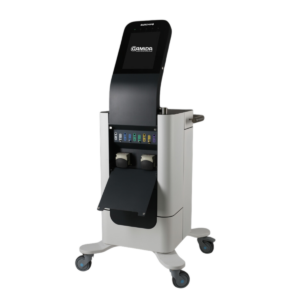
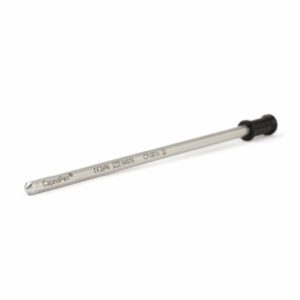
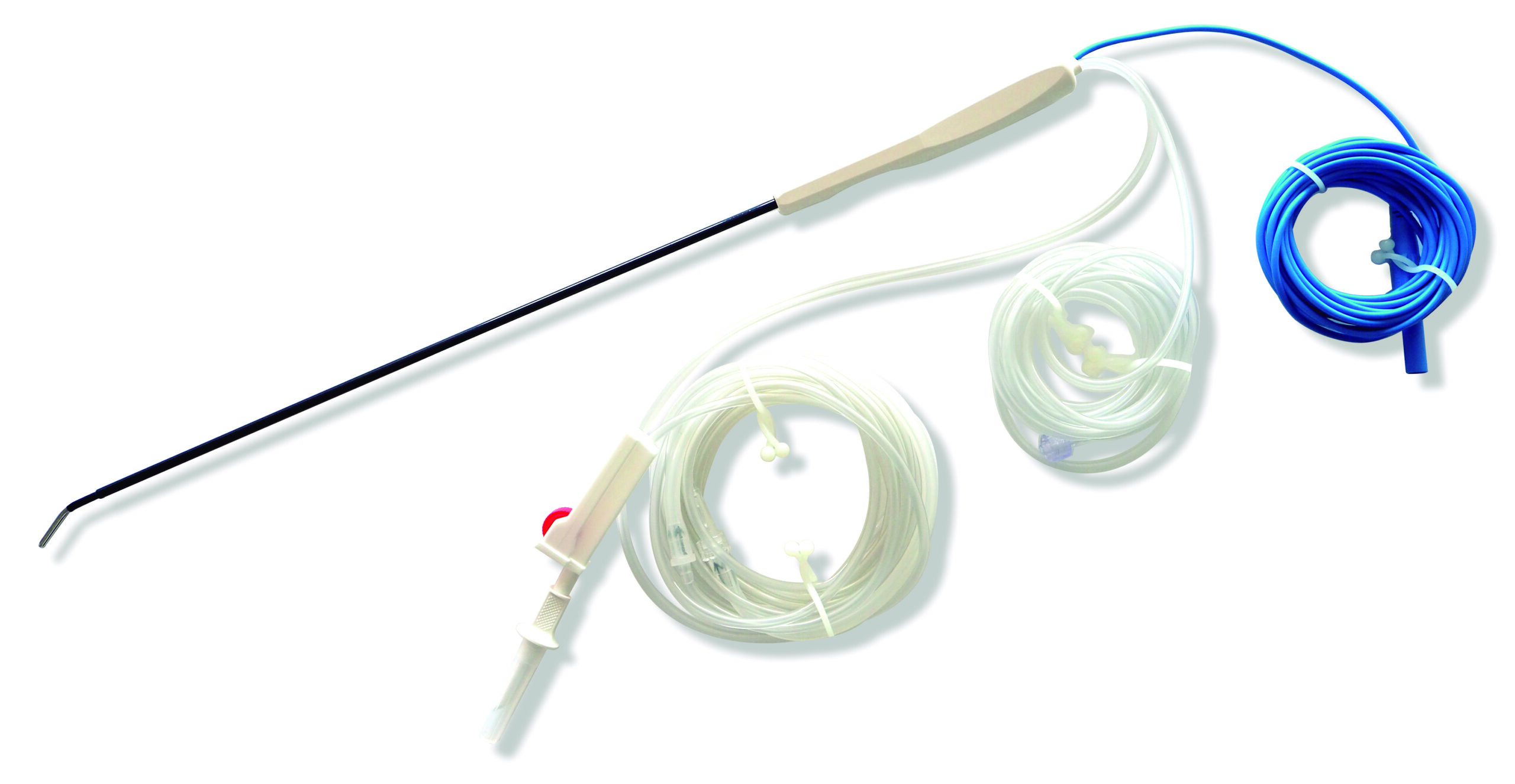
COOLINGBIS® is a monopolar electrode designed for hemostatic sealing, coagulation, and cutting (blade model) of soft tissue, intended for use with the COOLINGBIS® 1.0* radiofrequency generator.
It uses radiofrequency and an internally cooled electrode to facilitate surgical sealing, increase patient safety, and drastically reduce intraoperative bleeding.
COOLINGBIS® is specifically designed for partial or total resection of the liver, kidney, pancreas, and spleen.
*COOLINGBIS 1.0 is a radiofrequency (RF) generator capable of delivering electrical energy to tissues, producing a localized thermal effect.
-
COOLINGBIS® features an internal cooling system: the cooled saline solution circulates inside the electrode without coming into contact with the tissue, which prevents tissue from adhering to the electrode, increases coagulation capacity, enhances product safety, and finally, creates a circumscribed lesion beneath the electrode’s surface.
- Reduced local recurrence: internal cooling increases the sealing depth to create an additional ablation margin.
- Reduced blood loss: efficient and rapid high-power coagulation device.
- DUAL operating mode: certain electrode models incorporate a blade for cutting tissue.
- Faster coagulation: the electrode design is engineered to rapidly create coagulation lines.
- Quesada, R. et al. Impact of monopolar radiofrequency coagulation on intraoperative blood loss during liver resection: a prospective randomised controlled trial. Int. J. Hyperth. 33, 135–141 (2017).
- Quesada, R. et al. The impact of radiofrequency-assisted transection on local hepatic recurrence after resection of colorectal liver metastases. Surg. Oncol. 26, 229–235 (2017).
- Burdío, F. et al. Research and development of a new RF-assisted device for bloodless rapid transection of the liver: Computational modeling and in vivo experiments. BioMed Eng OnLine 8, 6 (2009). https://doi.org/10.1186/1475-925X-8-6.
- Villamonte, M. et al. The impact of additional margin coagulation with radiofrequency in liver resections with subcentimetric margin: can we improve the oncological results? A propensity score matching study. European Journal of Surgical Oncology, Volume 48, Issue 1, 82 - 88 (2022).
- Villamonte, M. et al. New technique to increase resection margins during mini-invasive liver resection: a propensity score-matched study. Digestive Medicine Research, 5:23. (2022).
- Moll, X. et al. Comparison of two radiofrequency-based hemostatic devices: saline-linked bipolar vs. cooled-electrode monopolar, International Journal of Hyperthermia, 39:1, 1397-1407 (2022).
Description
Technology:
COOLINGBIS® is a monopolar electrode designed for hemostatic sealing, coagulation, and cutting (blade model) of soft tissue, intended for use with the COOLINGBIS® 1.0* radiofrequency generator.
It uses radiofrequency and an internally cooled electrode to facilitate surgical sealing, increase patient safety, and drastically reduce intraoperative bleeding.
COOLINGBIS® is specifically designed for partial or total resection of the liver, kidney, pancreas, and spleen.
*COOLINGBIS 1.0 is a radiofrequency (RF) generator capable of delivering electrical energy to tissues, producing a localized thermal effect.
Additional information
| Information | <ul> |
|---|---|
| Benefits | <ul> <li>Reduced blood loss: efficient and rapid high-power coagulation device. </li> <li>DUAL operating mode: certain electrode models incorporate a blade for cutting tissue. </li> <li>Faster coagulation: the electrode design is engineered to rapidly create coagulation lines. </li> |
| Studies | <ol start="1"> |
| Legal information | COOLINGBIS® Electrodes: Class IIb medical device. Manufactured by VECMEDICAL. |
| Fabricant | <img src="https://gamida.fr/wp-content/uploads/2026/05/vecmedical-logo.png"> |
| Traduction_FR | 10059 |